
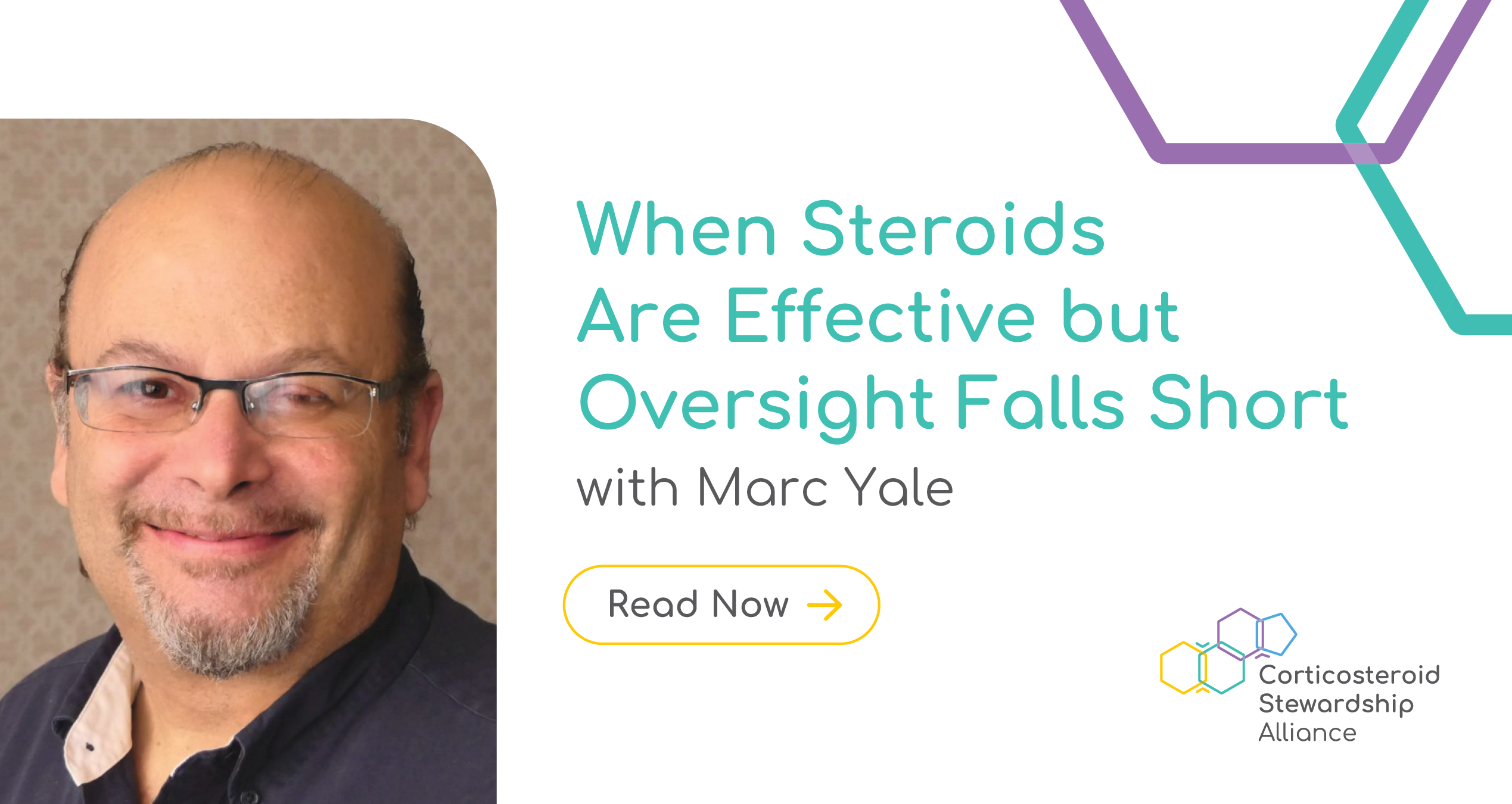
Corticosteroid stewardship matters for patient safety.
Corticosteroids are powerful medicines that play an important role in treating inflammation, autoimmune diseases and many other serious conditions. They can work quickly and effectively, often providing relief when patients need it most.
But when steroids are prescribed without adequate education, monitoring or follow-up care, the consequences can be life-altering.
Marc Yale experienced those consequences firsthand.
A Treatment Plan Without Enough Guidance
A decade ago, after months of unexplained symptoms and medical appointments, Marc was diagnosed with pemphigoid, a rare autoimmune blistering skin disease. As part of his treatment, he was prescribed 120 mg of prednisone daily for six months.
While the medication helped control his disease activity, Marc said he received little information about the risks associated with long-term, high-dose steroid use.
“No one explained what I needed to monitor, what side effects to look for or what steps I should be taking while on steroids,” he recalled.
Over time, Marc developed severe complications, including hypertension, hyperglycemia, cataracts, bone loss and steroid-induced diabetes. Already pre-diabetic before starting treatment, his blood sugar eventually rose to nearly 800, bringing him close to a diabetes-induced coma and resulting in hospitalization.
Even after tapering off steroids, many of the long-term effects remain.
The Importance of Monitoring and Follow-Up
Marc said one of the most difficult parts of his experience was the lack of ongoing care surrounding his steroid treatment.
“I was told to come back in six months,” he said. “Nobody talked to me about bone scans, blood sugar monitoring, calcium supplementation or what long-term steroid use could do to my body.”
His story reflects a broader challenge facing patients. Corticosteroids are commonly prescribed and can be beneficial, but patients are not always empowered with the tools, education or follow-up needed to safely manage treatment.
That is why corticosteroid stewardship matters.
Stewardship means ensuring patients receive the right steroid treatment at the right dose for the right duration while also minimizing preventable harm. It includes patient education, regular monitoring, clear tapering plans and coordination across providers to identify complications early.
For patients prescribed prolonged or high-dose steroids, proactive monitoring can make a significant difference. That may include tracking blood sugar, protecting bone health, screening for cardiovascular risks and helping patients recognize warning signs before complications become emergencies.
Putting Patients at the Center of Care
Marc believes better communication and oversight could have changed the course of his treatment experience.
“If they had done the right steps upfront, things could have been very different,” he said.
Today, he continues advocating for stronger patient education and more responsible steroid prescribing practices so other patients are not left to navigate serious consequences without support.
His message is simple: patients deserve more than a prescription. They deserve a plan.