
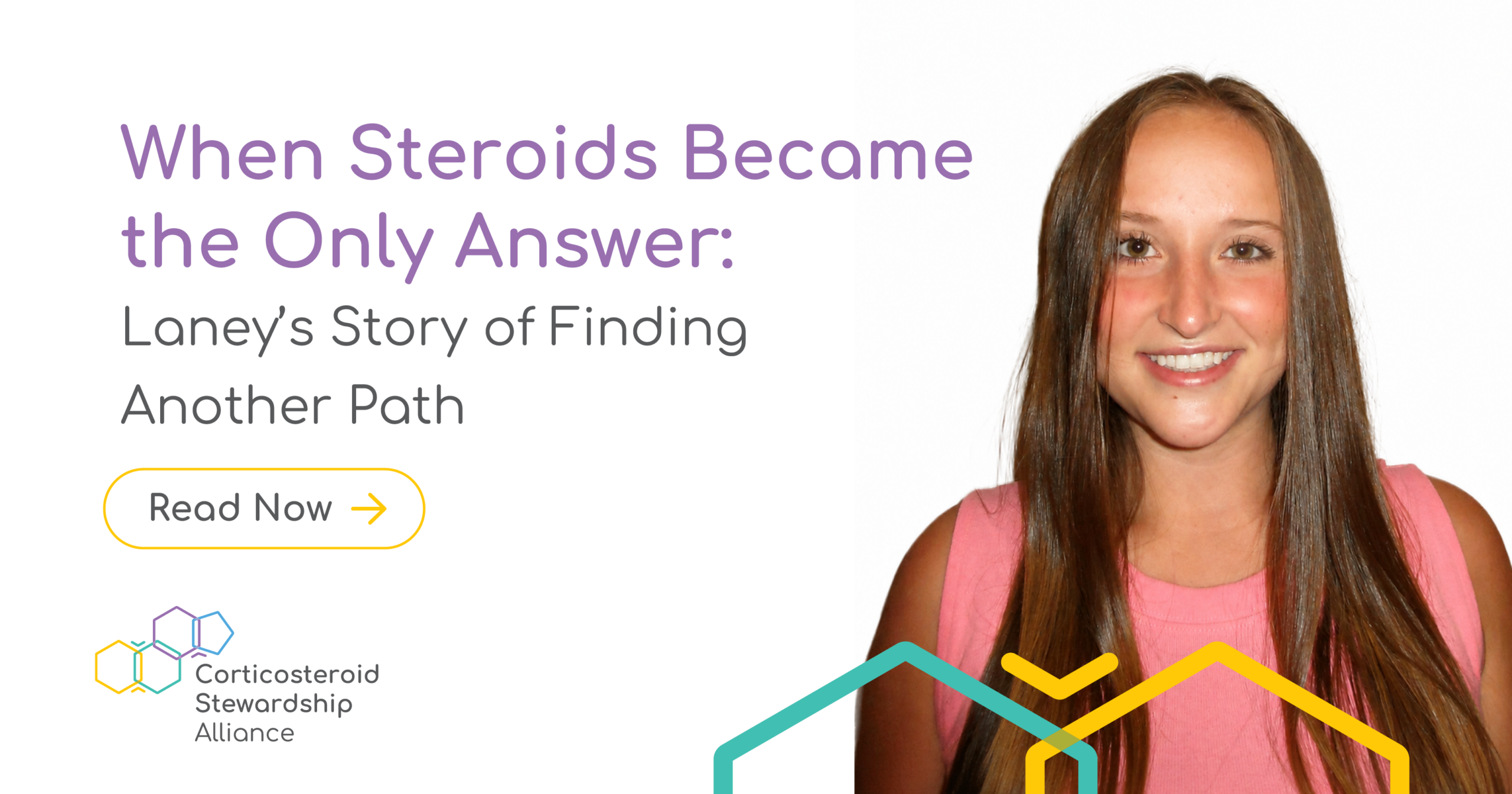
When Laney Hanna was diagnosed with atopic dermatitis at just 18 months old, corticosteroids quickly became a familiar part of her treatment. At the time, there were not many other options, and corticosteroids were often the first recommendation whenever her symptoms worsened.
For Laney, however, corticosteroids never felt like a permanent solution.
Her skin barrier was already damaged, leaving her skin weak and prone to peeling. She felt the treatments did not address what was happening with her skin and, in her experience, made the inflammation worse.
“I felt like no matter what I said, my doctor would always recommend a corticosteroid,” Laney noted.
Laney was prescribed both oral and topical corticosteroids concurrently for approximately 15 years. Because she started using them so young, her mother often stepped in to question whether another corticosteroid was necessary. Laney remembers frequent doctor visits and several trips to the emergency room dealing with side effects. She also felt that her providers did not always consider how much corticosteroid exposure she was already receiving.
“No matter what route it is, they were always just giving me another one without asking if I’m on any other corticosteroids,” she said.
Oral prednisone was particularly difficult. Laney recalls feeling weak, experiencing severe stomach pain and feeling foggy. Even when she felt terrible, she would push through and go to school. She also worries that her years of steroid use may have affected her growth. While she cannot know for certain what caused her to remain short, she said it is one of the lasting effects she thinks about most.
Finding another option
Eventually, Laney and her mother began looking for another option. At 16, she started a non-steroidal treatment and later added other biologic treatments. When the treatment worked, the difference went beyond her skin.
Laney felt more confident and was less concerned about people looking at her differently. She also found daily life easier without having to rely on topical treatments in the same way.
“It made me feel more confident because people wouldn’t look at me weird,” she said. “I had a way better quality of life.”
But even after finding a treatment that worked, Laney’s challenges did not end. She continues to receive letters monthly from her insurance company questioning whether she needs her non-steroidal medication. She has been told that over-the-counter treatments may work and that she could try other steroid options. On multiple occasions, she has also been required to return to her doctor to prove that she still needs her medication.
For Laney, repeatedly having to prove that an effective treatment is necessary is frustrating, particularly after spending years searching for an alternative to corticosteroids.
“I guess the doctor’s approval is not enough anymore,” she said.
A different approach to treatment
Laney does not believe corticosteroids should never be used. Rather, she wishes there had been more consideration of her individual circumstances, her cumulative exposure and the availability of other treatment options.
Her story illustrates why corticosteroid stewardship is not about taking an effective treatment away from patients. It is about making sure patients and health care providers have the information and options they need to make appropriate treatment decisions, including understanding previous corticosteroid exposure and considering alternatives when they are available and appropriate.
It also means ensuring that patients who find an effective non-steroidal treatment can access and maintain that treatment without unnecessary insurance barriers.
Laney’s advice to other patients is simple: “If it doesn’t work the first time, don’t keep pushing.”
Her journey is a reminder that patients deserve to be part of decisions about their care. For Laney, that meant finding a treatment that worked for her and gave her a better quality of life. Today, she hopes other patients have the opportunity to explore their options, ask questions and find a treatment plan that works for them.